 Helicopter Flights
 Hot-air balloon
 Other Experiences
 To help you

Storm NILS: Our Helicopter Missions to Restore Utility Networks
February 17, 2026
Storm NILS: Our Helicopter Missions to Restore Utility Networks
Aerial Inspection & Public Service Missions • Air Touraine
Storm NILS: Our Efforts to Restore Networks
NILS brought strong winds, heavy rain, and flooding. In this context, helicopters have become a crucial tool for monitoring, confirming, prioritizing, and expediting restoration efforts.
Why Helicopters Are Crucial During a Weather Crisis
When roads are cut off, the ground is saturated, and access becomes uncertain, aerial capabilities can save hours —sometimes days—in assessing the situation. The goal: to provide concrete information to guide decision-making, protect teams, and restore critical infrastructure.
- An immediate overview of the affected areas (fallen trees, utility poles, overpasses, riverbanks).
- Prioritizing responses: where to send ground teams first.
- Ensuring the safety of routes and construction sites (hazardous areas, obstacles, overhangs).
- Real-time coordination with crisis command centers.

Our Operations During Storm NILS
During NILS, Air Touraine was deployed to provide support to operators and field teams, guided by a clear strategy: act quickly, remain precise, and never compromise on safety margins.
1) Post-storm assessment
As soon as conditions permit, we conduct reconnaissance flights to identify the hardest-hit areas and assess the initial damage: fallen trees, blocked access routes, damaged infrastructure, and flooded areas.
2) Line inspection and monitoring
Power grids are particularly vulnerable during windy conditions: branches on power lines, damaged towers and supports, and deteriorated insulators. Aerial inspections help confirm defects and guide crews to the most urgent tasks.
3) Operational support for field teams
Beyond observation, the helicopter serves as an operational asset: identifying access points, surveying difficult areas, and supporting the coordination and safety of operations.
Operations under adverse conditions are demanding. They require careful selection of weather windows, strict limitations, and a decision to postpone the mission as soon as safety cannot be fully guaranteed.

What Does a “Post-Storm” Assignment at Air Touraine Look Like?
- In-depth weather briefing and risk analysis (winds, wind shear, rain, visibility, flooding).
- Coordination with the client and the crisis command center: priority areas, objectives, and constraints.
- Preparation: routes, altitudes, frequencies, points of interest, safety procedures.
- Implementation: observation, monitoring, regular reports, and adaptation to changes on the ground.
- Report: Operational Summary (Findings, Priorities, Areas of Concern).
Our DNA: “Artisans of the Sky”
Air Touraine brings a wealth of aviation expertise built up over many years: piloting skills, operational rigor, knowledge of on-the-ground constraints, and a strong safety culture. This high standard enables us to operate in challenging environments while carrying out essential missions: inspection, surveillance, reconnaissance, and operational support.
Do you need an aerial inspection or survey?
Network operators, local governments, and industrial companies: let’s discuss your challenges (deadlines, security, coverage areas, required data). We’ll guide you toward the most suitable—and most secure—solution.
Contact: operations@airtouraine.fr • Phone: (+33) 2 47 24 81 44 • Website: airtouraine.fr
You may also be interested in

Helicopter flight Tours - Amboise Royal
Flight time: +/-20 minutes
209,00 €
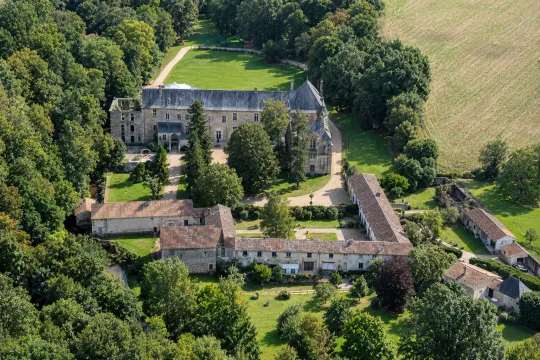
Helicopter Flight from Poitiers - In the Footsteps of Melusine
Flight duration: approximately 30 minutes
300,00 €

Helicopter flight Tours - Chenonceau & its jewels
Flight time: +/-30 minutes
259,00 €